01
1830—1847 · Origins
A child of Saint Thomas, between several worlds
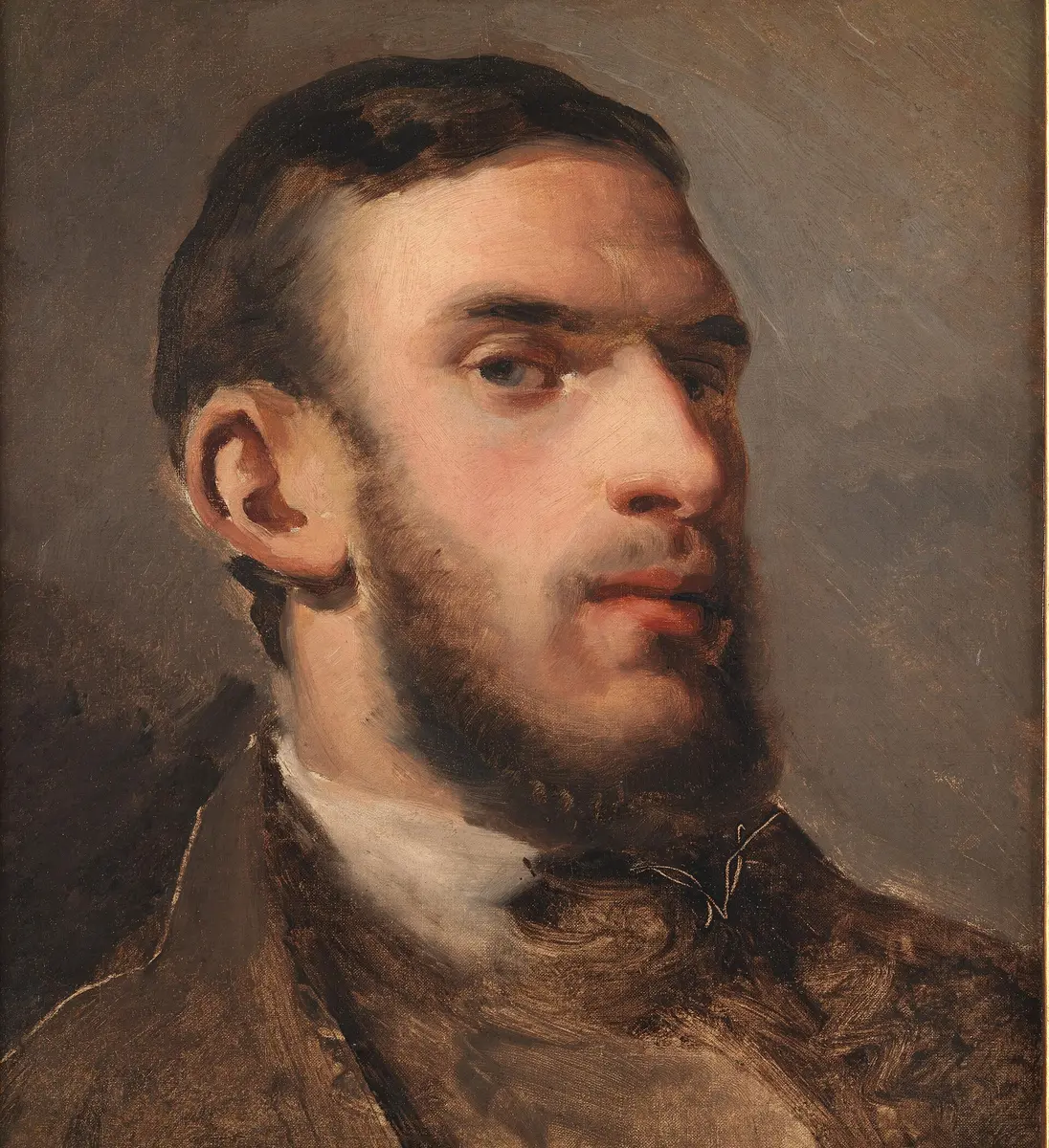
Jacob Abraham Camille Pissarro was born on 10 July 1830 in Charlotte Amalie on the island of Saint Thomas. The island was then part of the Danish West Indies, and its harbour connected the trade routes of the Caribbean, Europe, and the Americas. His father, Frédéric Abraham Gabriel Pissarro, was a merchant. His mother, Rachel Manzano-Pomié, also belonged to the island’s small Jewish community. Sephardic, Portuguese, French, and Caribbean roots met within his family. This composite identity remained an important part of his life, even when his art appeared to be wholly rooted in the French countryside.
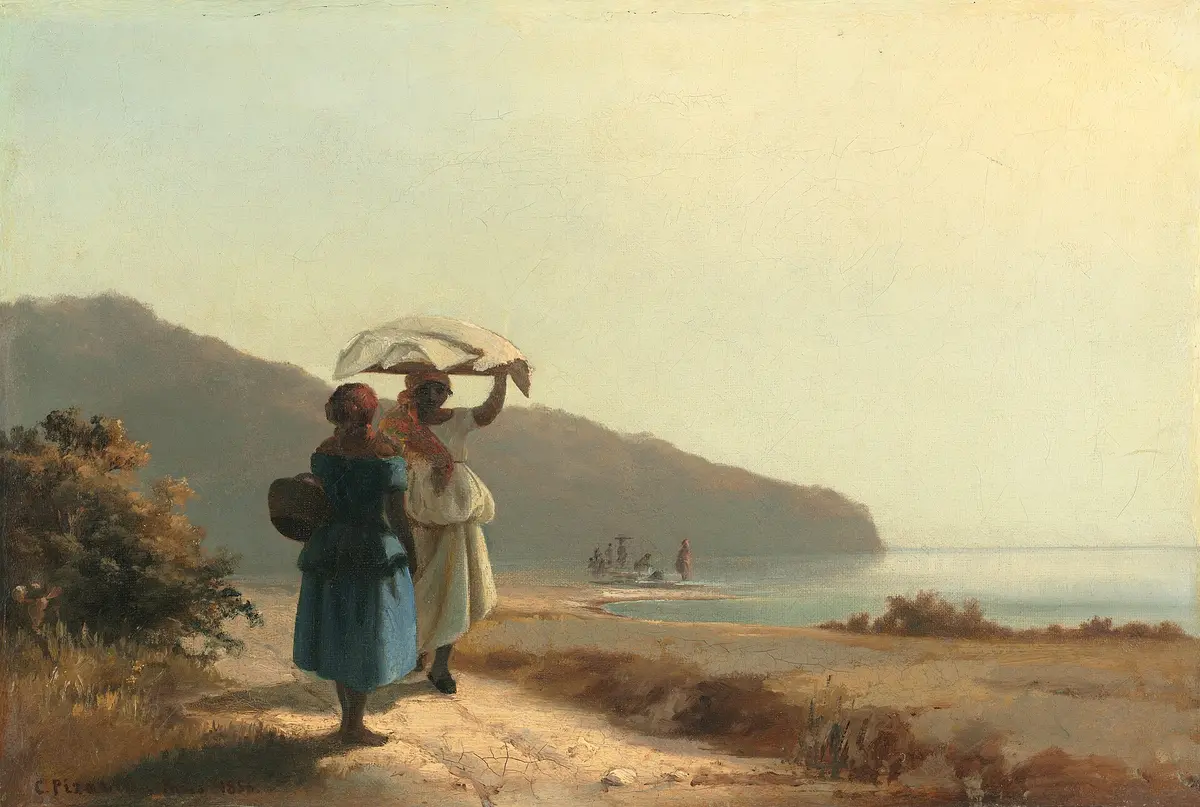
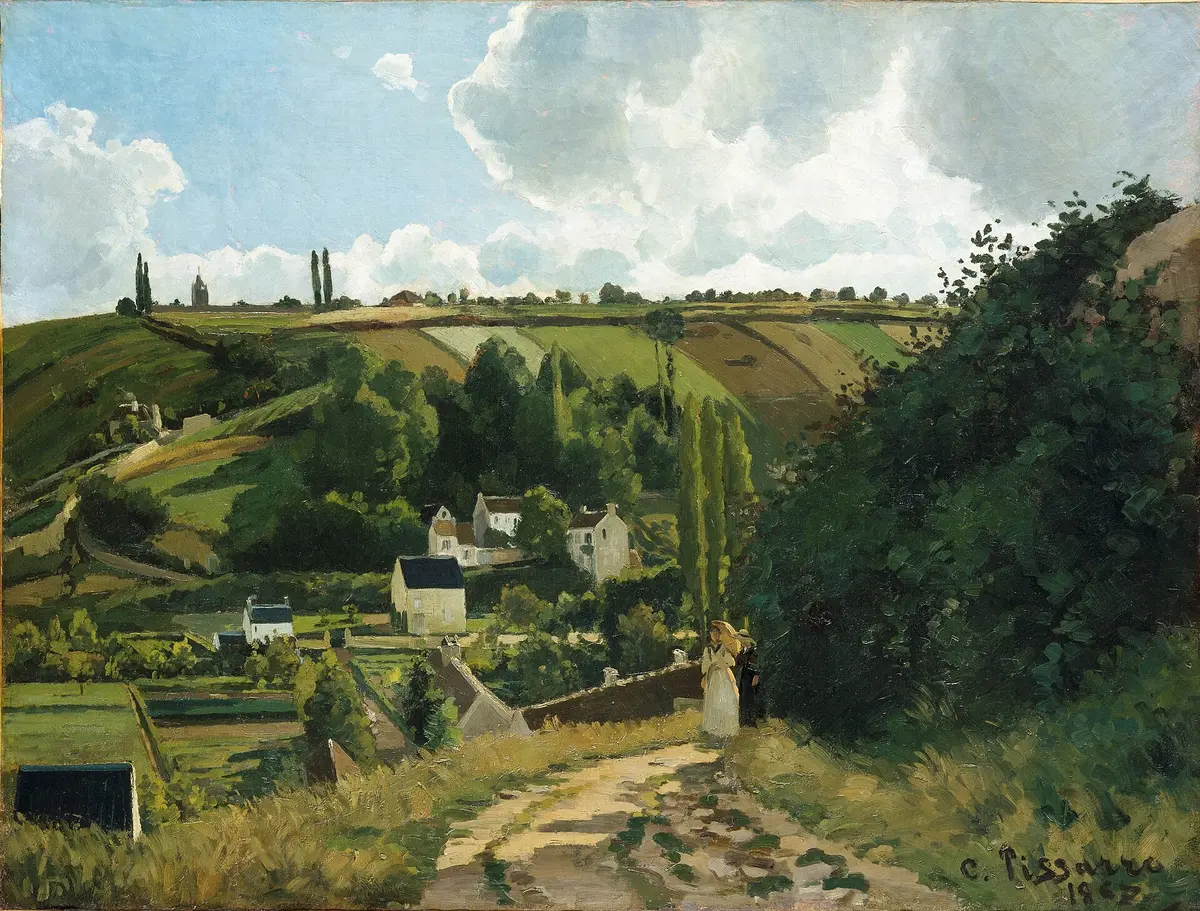
Saint Thomas was more than an exotic background. The young Camille observed a tangible working world: docks, warehouses, ships, steep hills, tropical vegetation, harbour workers, market women, and domestic servants. Colonial society was sharply hierarchical and marked by the recent history of slavery, abolished in the Danish possessions in 1848. Much later, his French landscapes would likewise give a central place to work and ordinary people without reducing them to picturesque accessories.
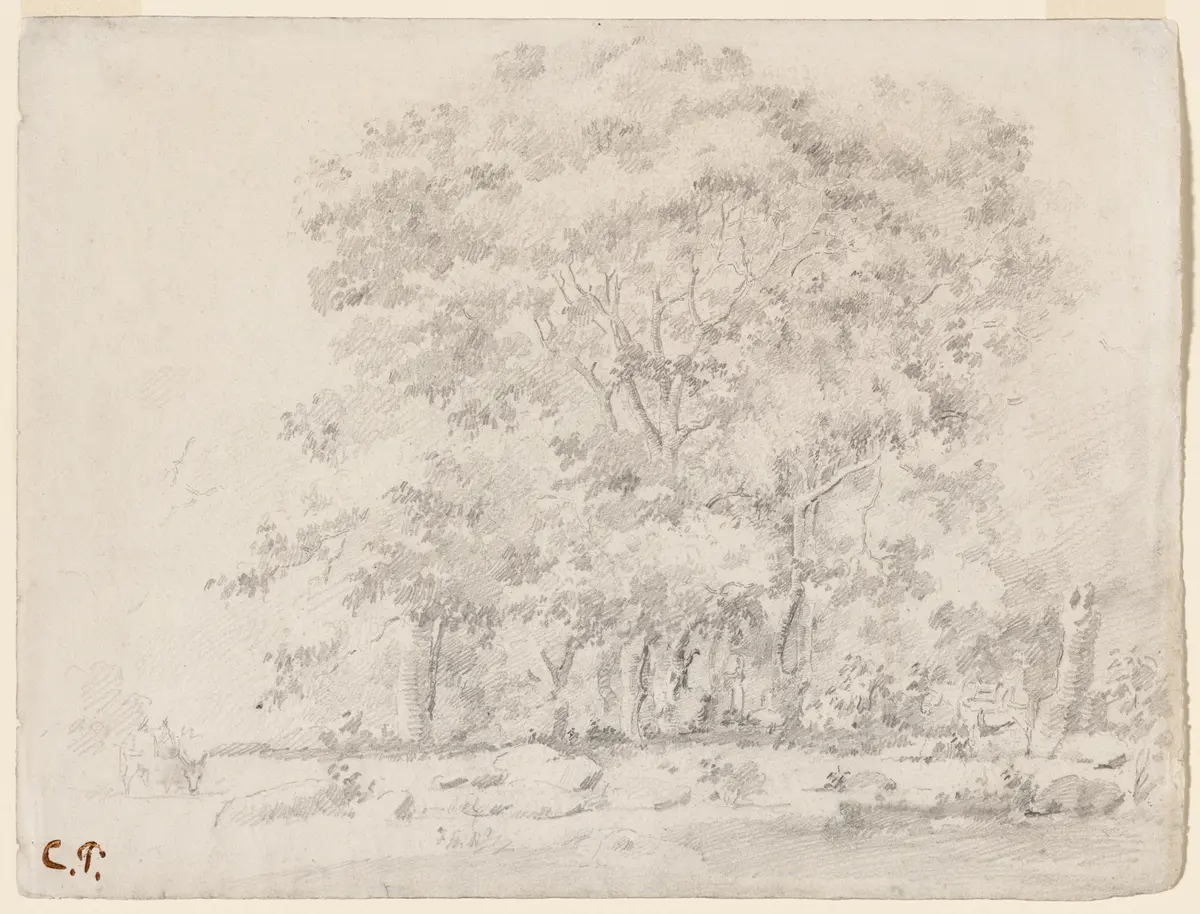
At about twelve, his parents sent him to school in France, at a boarding school in Passy. There he developed his command of French and his taste for drawing. When he returned to Saint Thomas in 1847, his family expected him to enter his father’s business. He carried out his duties at the shop but drew whenever he could. The tension between the career planned for him and his determination to become an artist had begun.